
Selling Gold & Silver
What Happens to Scrap Gold?
Oct
The short version: Much of the scrap gold we buy eventually gets melted and recycled. That’s why the gold content of your jewelry matters more than how it looks. Whether you have a broken chain, a bent ring, or a single earring, it could still be worth bringing in.
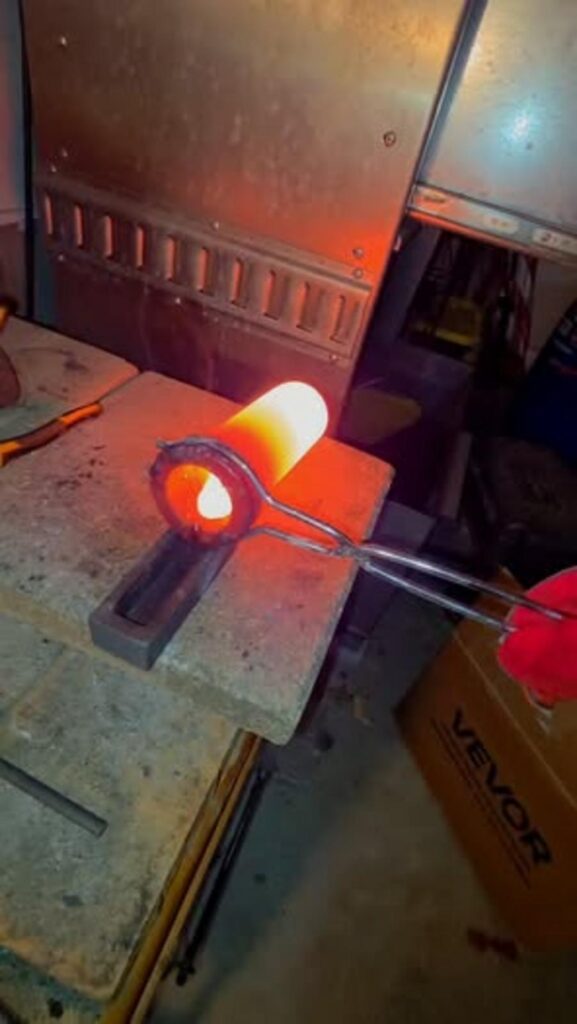
A lot of people assume the gold jewelry we buy just gets cleaned up and resold. Sometimes that’s true. But much of the scrap gold that comes through our doors eventually gets melted and recycled.
As a family business, we occasionally share behind-the-scenes videos of our family melting and recycling gold. It’s a fascinating process to watch, and it helps explain something important about the gold-buying business. Here’s one of our melting videos.
When jewelry is being purchased for its gold content, the karat and weight matter much more than its appearance.
Why scrap gold gets melted
Gold is remarkable because it can be melted and reused again and again without losing its essential properties.
When jewelry is too damaged to resell, outdated, or simply worth more as scrap than as a finished piece, recycling the gold makes sense. That gold can eventually become new jewelry, coins, bars, or other products.
That’s good news if you have a drawer full of jewelry you never wear.
A broken 14k bracelet contains the same amount of gold as an undamaged 14k bracelet of equal weight. A cracked ring with a missing stone can still have significant gold value. Even a single earring can be worth selling.
Of course, some jewelry is worth more than its gold content because of its design, brand, or potential resale value. We consider those factors when appropriate.
But when a piece is valued as scrap, it’s the gold inside that counts—not whether the jewelry is pretty, fashionable, or in perfect condition.
How we determine what your gold is worth
Before we make an offer, we need to know what we’re looking at.
At Greenville Gold & Silver, we evaluate your jewelry in front of you, using professional testing equipment, including our XRF analyzer, to help determine its gold content.
XRF stands for X-ray fluorescence. The analyzer measures the metals present near the surface of an item, helping us identify its composition. We may use additional testing methods when needed.
You can learn more about the process in our article on XRF testing and fair pricing.
For scrap gold, two of the most important factors are purity and weight.
The melt value is the value of the pure gold contained in an item, based on the current market price of gold.
Once we know the gold content and weight, we can calculate its approximate melt value. That provides a starting point for determining our offer.
We explain how we arrived at your offer before you decide whether to sell.
Here’s a simple example
Suppose you bring in 10 grams of 14k gold jewelry, excluding the weight of any stones or other non-gold components.
- 14k gold is approximately 58.3% pure gold.
- Ten grams of 14k gold contains approximately 5.83 grams of pure gold.
- One troy ounce contains approximately 31.1 grams.
- Your jewelry therefore contains approximately 0.187 troy ounces of pure gold.
Multiply that amount by the current gold spot price per troy ounce, and you have the approximate melt value.
Your offer is based on that value, along with other relevant factors, and we’ll explain how we got there.
You can follow the current gold price on Kitco’s live gold chart. Our guide to spot price vs. premium explains more about how market prices relate to buying and selling precious metals.
Why karat and weight matter more than appearance
Karat is a measure of gold purity. It tells you how much of a piece is actually gold, rather than other metals.
Here’s how the most common karats compare:
| Karat | Gold content | Common stamp |
|---|---|---|
| 24k | Approximately 99.9% | 999 |
| 18k | 75% | 750 |
| 14k | Approximately 58.3% | 585 |
| 10k | Approximately 41.7% | 417 |
Two rings that look nearly identical can have very different gold values.
An 18k ring contains substantially more gold per gram than a 10k ring. On the other hand, a heavy 10k chain might contain more total gold than a lightweight 18k pendant.
There are a few other things worth knowing:
- Stamps are helpful, but not conclusive. Markings such as 10k, 14k, 18k, 417, 585, and 750 indicate gold purity, but testing helps us verify what an item actually contains.
- Weight matters. The amount of gold in a piece is just as important as its purity.
- Gold-plated and gold-filled jewelry are different from solid gold alloys. They typically contain much smaller amounts of gold and are valued differently.
- Unmarked jewelry is still worth checking. Just because a piece doesn’t have a visible karat stamp doesn’t mean it isn’t gold.
If you’d like a more detailed explanation, see our guide to what your gold chain is actually worth.
What this means when you’re ready to sell
You don’t need to polish your jewelry, untangle every chain, or repair a broken clasp before bringing it to us.
Bring the bent bracelets, broken necklaces, single earrings, and rings that haven’t fit in years.
We’ll evaluate your pieces, test them as appropriate, weigh them, and explain our offer.
And one piece of advice we’ve always believed in: Don’t sell anything you’ll miss.
Once sentimental jewelry is sold, you may never see it again. A ring that belonged to your grandmother might mean far more to your family than its gold value.
If you’re unsure, there’s nothing wrong with keeping it.
For everything else, we’re happy to help you find out what it’s worth.
Visit our Sell Gold page to learn more about what to bring and what to expect.
Frequently asked questions
Do I need to know the karat before I bring in my gold?
Not at all. We evaluate unmarked jewelry, too. Our professional testing equipment helps us determine the gold content, even when there isn’t a visible stamp.
Does broken jewelry have less gold value?
Not simply because it’s broken. When jewelry is valued for its metal content, its condition generally doesn’t affect the value of the gold itself. Purity and weight are the important factors.
Will my gold jewelry be melted after I sell it?
Not necessarily. Some jewelry may be suitable for resale, while other pieces are valued primarily for their precious metal content and may eventually be melted and recycled.
How long does it take to sell gold at your shop?
Most visits take about 10 minutes, although larger collections may take longer. No appointment is necessary. Just bring your jewelry and a valid photo ID.
Come see us
Have gold sitting in a drawer? We’d be happy to take a look.
At Greenville Gold & Silver, you’ll deal directly with our family. We’ll evaluate your pieces in front of you, answer your questions, and explain how we arrived at our offer.
Greenville Gold & Silver
1637 Woodruff Rd, Greenville, SC 29607
Phone: 864-901-7975
Hours: Monday–Friday, 10 AM–6 PM; Saturday, 10 AM–3 PM
About the shop. Written by the Hilliard family at Greenville Gold & Silver. We’ve been buying, testing, and paying customers for gold, silver, and coins on Woodruff Road in Greenville since 2012. Dan started the shop, and family members Greg and Mike are usually the ones across the counter. Stop in, or read our reviews first and then come say hi.
